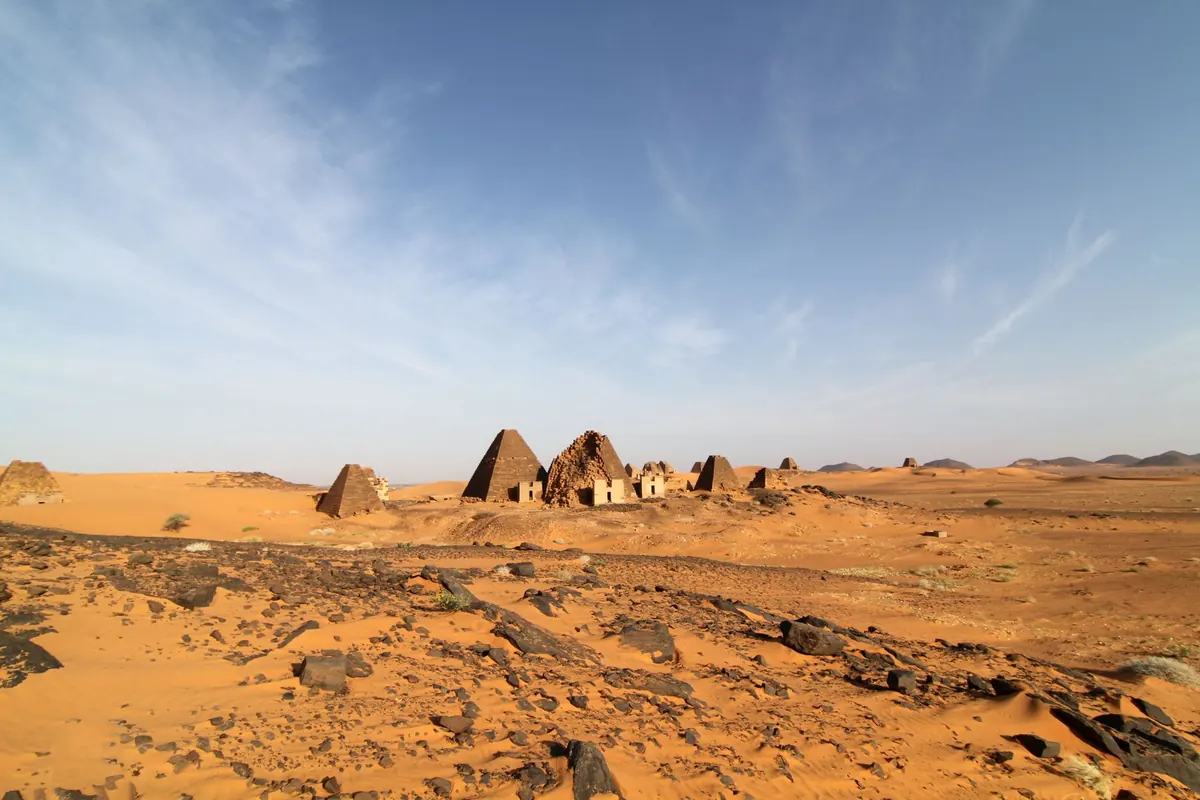
Ask a dozen people who have crossed the Sahara when to go and you will get a dozen answers, depending on whether they spent January shivering in a tent or July melting in one. The desert has no single season. Across roughly nine million square kilometres and a dozen countries, it offers everything from freezing winter nights on the Moroccan dunes to 45°C afternoons in the Egyptian oases. The trick is matching your month to the landscape you want and the company you can tolerate.
One desert, many climates
Latitude matters less than most people expect. Altitude, distance from the sea and local topography shape conditions more. Morocco's Erg Chebbi sits at around 800 metres and its nights are cold from November onwards. The Tassili n'Ajjer and Hoggar in southern Algeria climb past 2,000 metres, where winter days on the plateau can hover near freezing. Egypt's Western Desert is lower, drier and far more forgiving between November and March, while the Atlantic edge stays milder and often hazier.
As a general rule, most Saharan travel works best between October and April, with March and November the most reliable sweet spots. Summer is for the coast, for high ground, for early starts and for travellers who genuinely enjoy the heat.
Spring: the classic window
March and April are the months most outfitters build their seasons around. Days in the northern Sahara typically land in the mid-twenties to low thirties Celsius — warm enough to ride, trek or drive with the windows down, cool enough to sleep. The pre-Saharan fringe sometimes greens briefly after winter rain, which makes the country around Zagora and the Draa Valley look unexpectedly alive.
Two cautions. Spring is sandstorm season in Egypt and Libya, where the khamsin — a hot, dust-laden southerly wind — can blow for two or three days and cut visibility to a few dozen metres. And Easter fills the popular dunes fast. If you want a camp at Erg Chigaga or Merzouga in early April, book weeks ahead rather than days.
Autumn: warm days, softer light
October and November deliver much of what spring does, with quieter camps and a lower chance of wind. Morocco and Tunisia are close to perfect, and Egypt's oases open their trekking and camping season properly from mid-October. Further south, the tail of the rainy season can leave September and early October humid and hazy — not a problem, but not the crisp desert postcard either.
Early autumn still holds real heat in the deep south and in low-lying basins. If you are travelling in the first half of October, plan the same midday shelter you would use in summer.
Winter: cold nights, brilliant skies
December to February is the best window for Egypt's Western Desert, for Siwa and for Algeria's lowland routes. Daytime temperatures often settle between 18 and 24°C, and sunshine is close to guaranteed. The trade-off is the night. Clear skies let heat pour away after sunset, and desert camps regularly drop to single figures. At altitude, or on a windy night in the Moroccan Sahara, you can be within a few degrees of zero.
Pack accordingly: an insulated jacket, hat, gloves, thermals and a proper sleeping bag rather than the light one you would take in spring. Check mountain passes too — High Atlas routes can close briefly after snow, which affects access from Marrakech to the dunes.
Short daylight hours are the other consideration. In January you have perhaps ten hours of usable light, so plan fewer kilometres per day than you would in May.
Summer: heat, haze and empty camps
From June to August, large parts of the Sahara become genuinely risky for extended outdoor activity. Daytime temperatures above 40°C are routine and can climb higher in the oases and rocky plateaus. This is not the season for long treks or multi-day camel trips unless you are acclimatised, working with experienced guides and moving only in the very early morning and evening.
It can still work if you choose carefully:
- Head for the coast. The Atlantic edge of Morocco and Western Sahara stays cooler, with sea breezes and evening fog.
- Go high. The Hoggar and Tassili are marginally cooler, though the sun at altitude is fierce.
- Shift your hours. Walk before 9am and after 5pm, and spend the middle of the day in shade, in water or asleep.
- Expect haze. Dust and heat shimmer flatten long views, which hurts photography and stargazing alike.
In return you get quiet camps, softer rates and a desert that feels properly, unnervingly empty.
Wind, dust and visibility
Wind is the underrated factor in Saharan travel. One dust event can scrub out a dune sunset, close a road and fill every camera bag with fine grit. The patterns worth knowing are the khamsin in Egypt and Libya, the sirocco that carries Saharan air north to the Mediterranean, and the harmattan, whose dry haze settles over West Africa from roughly November to March.
- Wrap a buff or scarf over
Photo: mohamed Zekry / Pexels