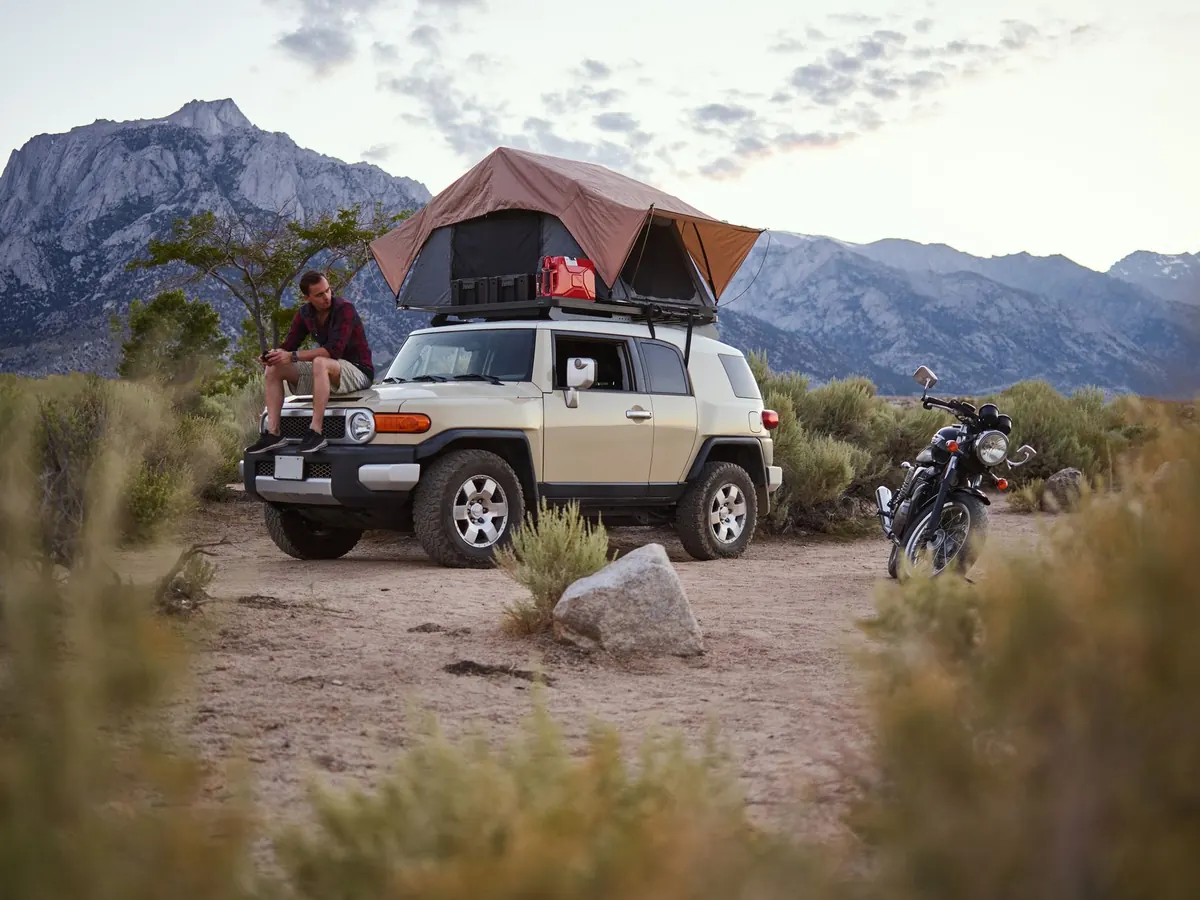
Two people, one vehicle, seven days and no resupply. That is the shape of most desert self-drive trips, and it means your packing list has to do two jobs at once: keep you comfortable, and keep you moving when something goes wrong.
Weight matters more than most people expect. Every extra kilogram costs fuel and costs you in soft sand, and anything buried at the bottom of the load bay is gear you will not dig out when you actually need it. A 20-litre jerrycan of water weighs 20 kilograms, and suddenly the maths of "just in case" gets very real. What follows is a working checklist for a week in the dunes and on desert tracks — shaped around a 4x4, but it scales to any vehicle with room for water, tools and a spare wheel.
The order matters as much as the contents. Water first, then the things that keep the vehicle mobile, then navigation, then everything that makes a night in the open bearable. If you run out of space, cut from the bottom of that list, never the top.
Water: the load you never ration
Start with water, because almost everything else can be improvised and water cannot. For drinking, cooking and basic washing, budget four to five litres per person per day in hot weather, then add a reserve you do not touch — half a day's supply per person at minimum, more if you are travelling far from help.
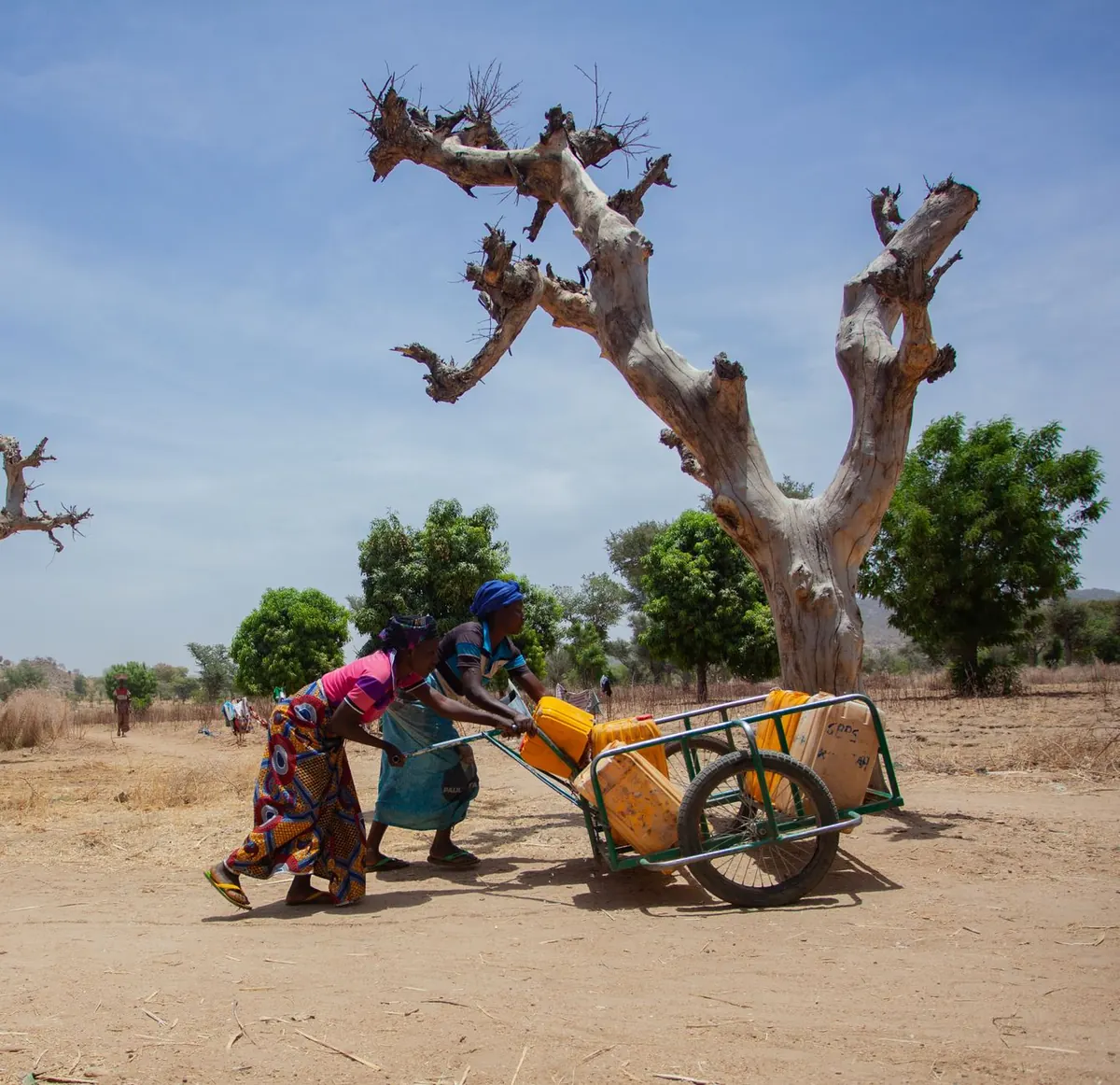
For a seven-day trip with two people that is somewhere around 100 litres, which is why desert travellers carry water in 20-litre jerrycans with taps rather than a boot full of small bottles. Rigid containers survive heat, stacking and being strapped down; thin plastic splits. Keep the cans out of direct sun, and put a five-litre bottle inside the cabin so drinking does not need a stop.
Electrolyte tablets or powder earn their space when temperatures climb, as does a wide-mouthed bottle for mixing. And a habit: sip steadily through the day rather than gulping at camp, when you have already stopped sweating and started dehydrating.
A few practical touches make the system work. Decant a couple of litres into a small bottle for handwashing, teeth and wound cleaning so you are not opening the main cans constantly. Keep a damp cloth in a zip bag for wiping dust off faces and hands. Rigid cans can be lashed upright with a ratchet strap, but allow a little room for expansion in the heat, and never fill to the very brim. If you are travelling in summer, a jerrycan left on a black roof rack can get hot enough to be unpleasant to drink, so rotate it into the shade at camp and drink from the cabin bottle first.
Recovery gear and vehicle spares
Sand is the great equaliser. A vehicle that cruises happily on gravel will sink to the axles on a soft dune, so recovery kit is not optional equipment for a desert trip — it is part of the vehicle.
Recovery essentials
- Two recovery boards, stored where you can reach them without unpacking
- A long-handled shovel. Short folding shovels look clever and dig badly
- A rated kinetic recovery rope or strap, with no metal hooks
- Two rated shackles, plus a soft shackle if you have one
- Work gloves, and a second pair for whoever is digging
- A tyre deflator, an accurate pressure gauge and a 12V compressor
- A tyre plug kit, and a second spare wheel or tyre if you are going remote
Practice the routine before you need it. The moment a wheel starts digging, stop and reverse out along your own tracks rather than applying more power — spinning only buries you deeper. If you are already bellied out, drop your tyre pressures to around 15 psi, clear sand from in front of each wheel with the long-handled shovel, lay the boards, and drive out gently and straight. Doing this once on a soft verge near home teaches you more than any article can.
Spares and tools
You cannot carry a spare of everything, so think about what stops the vehicle dead and what you can fix at the roadside. Belts, hoses and clamps are the classics; electrical faults come next.
- Fuses, bulbs, cable ties, duct tape and self-amalgamating tape
- Coolant, engine oil, brake fluid and a funnel
- Spare fan belt and radiator hose, plus hose clamps
- Jump leads or a jump pack
- A basic tool roll: sockets, spanners, pliers, screwdrivers, wire and crimps
- A spare key, carried on your person rather than left in the vehicle
- Extra fuel in approved containers, only if the route genuinely demands it — and check local rules before you travel
Navigation and communication
Phone signal disappears the moment you leave the tarmac. Carry two independent ways of knowing where you are.
A paper map of the region and a baseplate compass are the reliable pair. On top of that, load offline maps onto a phone or a dedicated GPS unit, and bring a power bank and a 12V charger. Before you set off each morning, mark your start point and your destination as waypoints, and note the distance. Mark junctions as you pass them: reversing a wrong turn at the junction is far easier than five kilometres down a track.
For communication, a satellite messenger or personal locator beacon is the difference between a delay and an emergency when there is no phone signal. Whatever you carry, leave a written plan with someone at home — route, vehicle description, and the time you expect to check in — and stick to the check-in.
Shelter, sleep and camp comfort
Desert nights are not warm. Temperature swings of twenty degrees or more between afternoon and dawn are normal, and a sleeping bag rated for summer camping will leave you shivering at 4 a.m. Take a bag suited to near-freezing, and a mat with real insulation value, because cold ground pulls heat out faster than cold air.
- Tent or swag with sand pegs and a mallet — standard pegs pull straight out
- Groundsheet or tarp, and a second tarp for shade during the midday stop
- Head torch per person, plus a spare and spare batteries
- Camp chairs and a small table, if you have the space and want a civilised evening
- Rubbish bags, and a plan to carry every scrap of waste out with you
Food, cooking and the camp kitchen
Seven days without resupply means planning meals, not just packing food. Aim for easy one-pot dishes, high-calorie snacks and plenty of salt — you will crave it. Tinned food is heavy but forgiving; dehydrated meals are light but need water, which you are already carrying in bulk.
- Stove, fuel, matches and a lighter, plus a back-up ignition source
- Pot, pan, bowls, mugs and cutlery for each person
- Non-perishables kept in a sealed tub so sand stays out
- Snacks in the cabin: nuts, dried fruit, biscuits, boiled sweets
- Biodegradable soap, a small wash basin and a cloth
Clothing, sun protection and first aid
Dress for cover, not for cool. Loose long sleeves and trousers keep the sun off and slow fluid loss, and they are cooler than bare skin once the temperature passes 35°C.
- Two long-sleeved shirts, one light pair of trousers, one warm layer
- Wide-brimmed hat, sunglasses and a scarf or shemagh for dust
- Sun cream and lip balm with SPF, reapplied through the day
- Sturdy boots for digging and walking, plus sandals for camp
- Spare socks — dust and sweat destroy them quickly
- First aid kit with blister care, antiseptic, painkillers, rehydration salts and personal medication
Packing and loading strategy
The last ten percent of a desert packing job is how it all goes in, and it decides whether the trip feels easy or exhausting.
- Put the heaviest items low and between the axles — water cans, tools, spare wheel.
- Keep recovery gear as the last thing you load and the first thing you can reach.
- Pack a small day bag with water, snacks, sun cream, first aid and a map so a stop needs no unpacking.
- Secure everything. A loose box becomes a projectile on a rough track.
- Do a full test pack a week early, then drive around the block with it loaded.
In the desert, the vehicle you leave in is the vehicle you come back in. Pack for the worst hour of the trip, not the best one.
Photo: ArtHouse Studio / Pexels