Soft sand is the one surface where the right kit under the tyres turns a two-hour dig into a two-minute shuffle. But sand ladders and traction boards are not interchangeable, and the one that looks toughest on the roof rack is not always the one that will get you out of a bowl of powder. They grip differently, pack differently and fail differently. Here is how they compare where it counts.
Two Families of Kit, Often Confused
Sand ladders are the older design: rigid planks, usually aluminium or steel, with punched holes, stamped studs or a grid pattern. The name traces back to wartime pierced steel matting laid over soft ground for aircraft, later cut down and carried by desert drivers. Classic versions are flat and straight; others fold in half or come in segments joined by flexible links so they follow the ground beneath them.
Traction boards are the moulded composite type most people picture today: nylon or reinforced plastic, roughly a metre long, with a chevron pattern of raised nibs, tapered ends that double as a ramp, and cut-outs for mounting pins. They are normally sold in pairs and stack tightly.
There is a third option worth knowing: flexible rubber or segmented mats that roll up small and spread load over a wide area. Useful on long, gently soft beach sand; less convincing when you need real bite.
Grip and Flotation in Loose Sand
This is where the two designs part company.
Traction boards win on bite. The nibs are aggressive, and because the board has a slight curve and a tapered leading edge, a tyre climbs onto it rather than bulldozing it under. In dry, fine sand that has swallowed your tyres to the rims, that bite is what gets you moving.
Rigid sand ladders win on flotation and bridging. A flat plank spreads the weight of a heavy vehicle across a wider footprint, which is exactly what you want when the surface is soft a long way down, or when you need to bridge a rut, a step or a gap. What they lack is grip: a wheel spinning on smooth, sand-polished aluminium will simply skate. Punched holes and studs help, but they cannot match a moulded cleat.
The practical upshot: boards for traction, ladders for bridging and load spreading. Most desert travellers who carry only one set carry boards.
Weight, Packing and Storage
- Traction boards: a pair adds several kilos and takes up genuine roof space. They stack, but they are bulky, and cheap mounting pins that work loose are a common irritation.
- Rigid ladders: comparable or heavier, and longer. Folding versions halve the length at the cost of a hinge that can seize solid with sand.
- Flexible mats: the lightest and most compact of the three. Roll them into a bag and tuck them beside the fridge. The trade-off is grip and durability.
Check where they will actually live before you buy. A pair of boards that fits nowhere sensible is a pair of boards you will leave at home.
Durability Under Sun, Sand and Salt
Desert conditions attack recovery gear in three specific ways. Ultraviolet light embrittles many plastics over time, so a composite board left strapped to a roof rack for months can crack where you least expect it, often right where the mounting pins bite. Abrasive sand polishes away edges and fills every crevice. Salt from coastal dunes starts corrosion on steel.
Aluminium ladders resist corrosion reasonably well but bend under heavy point loads, and once bent they never sit flat again. Steel ones are strong and rust unless you keep on top of the paint. Composite boards handle flex and impact well, but heat and UV are their weakness. Either way: rinse after coastal trips, store out of direct sun where you can, and inspect for cracks or bends before every trip.
Ease of Use: What Recovery Actually Looks Like
Neither option works if you skip the basics. The sequence is much the same for both:
- Stop digging with the throttle. Wheelspin buries the vehicle deeper and turns soft sand into a pit.
- Drop your tyre pressures. Lower pressure lengthens the footprint, which is the single biggest gain available to you. Check your vehicle handbook for sensible limits and reinflate before hitting tarmac.
- Clear the sand in front of each driven wheel with a shovel or your hands until the tyre has room to climb.
- Place the board or ladder so the leading edge sits flat against the tyre and the trailing end slopes gently down into undisturbed sand. Shallow angle, no step.
- Apply gentle, steady throttle in a low gear with the wheels straight. Let the tyre walk up the board. Once you are moving, keep momentum.
- Recover your kit as soon as the vehicle is clear, before someone drives over it or it disappears into a drift.
Boards are quicker to place and easier to angle because of the taper. Ladders often need more digging to get them sitting flat.
One safety point matters more than any gear choice: never stand in line with a spinning wheel or beside a board under load. Recovery boards under tension can move suddenly and with real force.
Matching Kit to Your Driving
Big dunes and soft powder, travelling alone, wanting the fastest exit? Traction boards. Long beach runs with soft patches and a heavy load? Flexible mats plus boards. Rock steps, ruts and mixed terrain as well as sand? A pair of rigid ladders earns its place. Vehicle weight matters too: check the manufacturer's stated load rating against your laden axle weight rather than trusting the marketing photo of a pickup parked on a dune.
Getting More Out of Either
Whatever you carry, a few habits make far more difference than the material. Bring a proper long-handled shovel, know your tyre pressures, and practise a recovery on a quiet dune before you need one for real. Keep the mounting hardware tight and the boards out of the sun when parked up. And accept that in deep, fine sand, deflating your tyres and driving smoothly will rescue you more often than any piece of kit bolted to the roof. Recovery gear is a backup, not a technique.
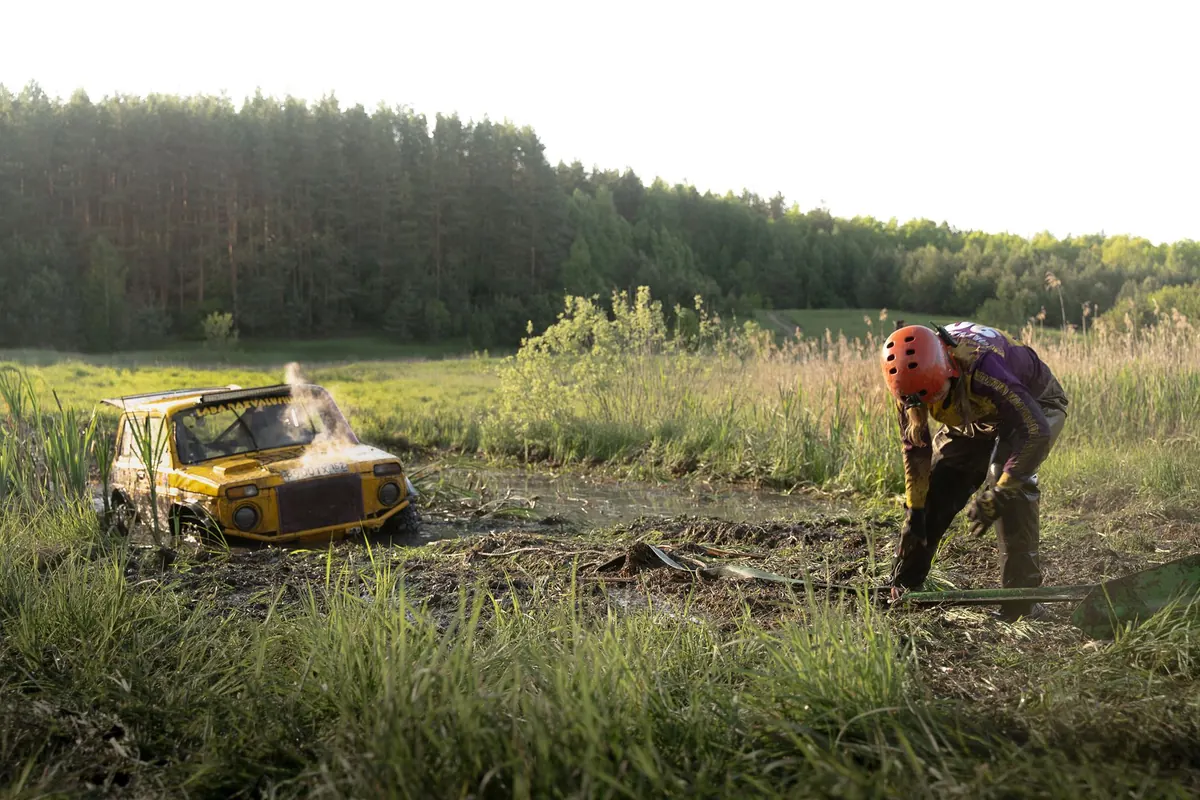
Photo: Alex Urezkov / Pexels